Commercialization and Continuity: Primary Care in Australia

The term “Primary Care” is thought to date back to about 1920, when the Dawson Report was released in the United Kingdom. That report, an official “white paper,” mentioned “primary health care centres,” intended to become the hub of regionalized services in that country. (ref)

One definition is

“the provision of integrated, accessible health care services by clinicians who are accountable for addressing a large majority of personal health care needs, developing a sustained partnership with patients, and practising in the context of family and community.”

Outcomes

There is good evidence that high quality Primary Care improves outcomes. Tertiary Care is expensive and in contrast, does not improve outcomes – it may even be harmful (1)

Six mechanisms, alone and in combination, may account for the beneficial impact of primary care on population health. They are (1) greater access to needed services, (2) better quality of care, (3) a greater focus on prevention, (4) early management of health problems, (5) the cumulative effect of the main primary care delivery characteristics, and (6) the role of primary care in reducing unnecessary and potentially harmful specialist care.

Preventive interventions are best when they are not related to any one disease or organ system. Eg cessation of smoking, wearing of seatbelts and physical exercise. The benefits of these interventions are clear. It is more difficult to show benefit from screening for specific diseases, though many interventions have been proposed. The idea that a checkup and early detection of various diseases will change the outcome is promoted regularly in popular media. But there is no convincing evidence that a regular checkup improves outcomes (see my previous article).

Equity is important – cost to the consumer reduces equity.

Primary care has a greater impact in improving outcomes in lower socioeconomic groups.

Specialist and tertiary services have either no effect or an adverse effect on overall outcomes. But access to hospitals and tertiary care is political “hot button” issue – politicians find it difficult to resist such pressure.

There is good evidence that patients attending a specialist directly are more likely to have unnecessary hospital admissions and poor outcomes than those seeing a Primary care physician first. (3)

There is a good theoretical basis for this – a specialist used to hospital practice over-estimates the rate of abnormality in a Primary Care population when planning intervention or investigation – ie the “pretest probability” in hospital patients is different to the probability in a Primary Care population. This affects the “sensitivity” and “specificity” of the intervention.  

WHO paper on Primary Care (2008) (2)

This paper describes several models of service delivery in Primary care.

“Medical” model.

In this approach, the client interacts intermittently with the service in treating or managing specific diseases or issues – the service has responsibility limited to the condition being managed for the client during an episode of care.  

“Program” Model

Programs target a specific area of the client or population Health – eg Chronic Disease, Trachoma,  Rheumatic Heart Disease. The client’s Health Care is broken into “parts” and different clinicians deal with one area. Care may become fragmented and it is important to communicate between various providers/clinicians. Often the record systems in use are not up to the task or there may even be “silos” between record systems. Responsibility for the client is limited to the condition being managed by the program.    

Holistic Model

The Clinician or service takes responsibility for the client from birth to death and manages all their issues including advocating in “nonmedical” issues such as housing and employment. This is regarded by the WHO as the most effective approach.

In practice most Primary Care services in Australia are a combination of the first and second models – it is rare to see the third model.

Generalist vs Specialist Care

If we accept that an “Holistic” model is best and most effective, and that Care should be fragmented as little as possible, then the Clinician delivering the care must have a broad knowledge and scope of practice. He/she must be able to deal with all ages and be able to cope with presentations across many clinical domains. Specialists deal well with their area of specialty but poorly otherwise. Current systems devalue the Generalist with many tasks they have previously performed being taken up by various specialities. (eg normal childbirth). Common conditions formerly dealt with by a GP are now routinely referred. This is inefficient and expensive and may result in poorer outcomes (see above).       

Continuity – the value of a relationship

Continuity is one of the principal pillars of good Primary Care. The Clinician has a relationship with the client and knows their history and family background. There is good evidence that this improves outcomes and saves money.

“Among other improvements, continuity of care leads to a higher quality of care, more preventive care, decreased emergency department visits, and reduced odds of avoidable hospitalization.”(ref)

Hospital systems deal with episodic illness on the whole – they “live in the now” and cope poorly with the requirements of ongoing care in complex chronic illness.

Complexity and multimorbidity

Primary Care is increasingly managing clients with many different issues. The Single Issue “cure” approach is no longer valid in these cases. We must become skilled at managing Complexity and adopt a different approach – incremental and iterative and accept that we cannot “solve” most of the issues. (See my article on Complexity).  Continuity is critical here.

What is happening now?

Commercialization

In Third World countries where Governments have not controlled the delivery of Primary Care and resources are limited, delivery has become dominated by commercial providers. Clients bear much if not all the cost. There is a proliferation of ineffective treatments and a reduction in quality. Equity is reduced and the “Inverse Effect” dominates – ie most of the care goes to those who can afford it but need it least.

In Western countries such as Australia this effect has been less, but Governments struggle with the cost of programs such as Medicare. Commercial providers have exploited the open access nature of Medicare, with the result that Government has imposed more and more complex rules and barriers to save costs. Subsidies such as Rebates have not kept up with costs and “the Gap” paid by clients has steadily increased. Specialist services are essentially no longer Bulk Billed and the rate of Bulk Billing in GP services is declining. Equity and access has declined as a result, where the Australian health system was once regarded as having excellent equity as a reasonable cost. New and expensive drugs and treatments appear regularly – Governments struggle to fund these. Medical Evidence has probably become corrupted (see my previous article).       

General Practice in Australia

General Practice was the principal provider of Primary Care services in Australia in the past. But some believe it is in decline, or even in crisis. Various bodies and clinicians are competing in the Primary care space eg nurse practitioners and pharmacists. Various specialists now perform many roles formerly the domain of General Practice – there has been a loss of scope for GPs

In the Health system generally continuity has been devalued. There is acceptance of massive staff turnover in services such as Remote Health. Hospital systems have always been staffed at a junior level by doctors in training who rotate regularly though different posts. Record systems in hospitals are primitive and not up to the task of compensating for this rapid turnover of staff.

Bulk Billing (medical services free to the consumer) and Emergency Department waiting times are political “hot button” issues receiving a lot of attention at present.

The Federal Government recently announced “Acute Care Clinics” – this promotes the idea that most medical presentations are single issue and that continuity is not important. Bulk Billing incentives were increased but the basic Rebate for GP consultations was left unchanged. The Health Minister (!!) urged consumers to “shop around” for a Bulk Billing clinic so they could avoid paying a gap fee. While cost is important to equity, this statement ignores the value of continuity. It appears the Health Minister does not understand this. Governments have been unwilling to increase Rebates to keep Gap costs down, instead relying on Bulk Billing incentives. Complex illness takes more time and requires sophisticated clinical skills to manage. These clients are generally less able to pay for services but the Rebates for longer consultations are effectively less.       

The GP is increasingly required to perform bureaucratic tasks, generally involving access to various expensive resources. There is also an increase in “legal” tasks such as licensing medicals and certificates. These consultations have three parties involved – the GP, the client and another body paying the cost or requiring the report or certificate. The GP has two relationships and duties – one to the client and one to the third party. These relationships may be in conflict and cause “moral ambiguity”– a conflict which the GP must manage.     

Conclusion

Good Primary Care is effective in improving outcomes and economical of resources.

The principal elements of Primary Care are “Expert Generalism” and Continuity. Complexity is an increasing challenge which requires a new approach and calls on a Generalist Knowledge and a relationship with the client.

 But the traditional model of Primary Care in Australia is under threat. GPs face more complexity for less money, competition from other providers, an increase in nonmedical tasks and a downgrading of clinical scope. Policy makers and politicians appear unaware of these challenges.

References

(1) Milbank Q. 2005 Sep; 83(3): 457–502.

Contribution of Primary Care to Health Systems and Health

Barbara Starfield, Leiyu Shi, and James Macinko

(2) The World Health Report 2008 Primary Health Care WHO

(3) Can Fam Physician. 2021 Sep; 67(9): 679–688.

Why does continuity of care with family doctors matter?

Review and qualitative synthesis of patient and physician perspectives

Dominik Alex Nowak, MD MHSc CCFP, Natasha Yasmin Sheikhan, MPH MHS

Sumana Christina Naidu, BHSc Kerry Kuluski, MSW PhD

Ross E.G. Upshur, MD MSc MCFP FRCPC

Complexity in Medicine

What is “Complexity”?

We all have a lay understanding of complexity – the word describes a system or object that has many parts, the workings of which may be difficult to understand. But many systems that appear complex are merely “complicated” – their many components are well described and understood, at least by someone. A Smartphone is such a system. A system that is “complex” is one that is comprised of many interacting components or systems which behave and affect each other in unpredictable ways. In our world there are many such systems such the weather, the economy, and large software projects as discussed in previous posts. We use mathematics to describe, analyse and design many of the objects and systems in use in our world today. But “Complex” systems are nonlinear and unpredictable – they are not easily amenable to mathematical analysis. (See my article on Complexity and Software design)

Another approach to Complexity is to consider that systems , clinical issues, or even patients can be regarded as an interconnected web with components that affect each other.

““Everything hangs together” defines complexity; the Latin word complexus literally means interwoven—studying complex problems thus is the study of interconnectedness and interdependence.

This notion is reflected in the definition of a complex (adaptive) system: A complex (adaptive) system is “a whole consisting of two or more parts (a) each of which can affect the performance or properties of the whole, (b) none of which can have an independent effect on the whole, and (c) no subgroup of which can have an independent effect on the whole.””(ref)

Most current protocols and research are based on a convergent, “reductionist” approach to diagnosis and treatment. Indeed much of of our Clinical Reasoning uses such a process. While this approach may help to “solve” a particular clinical presentation or issue, it often does not describe or capture the essential elements of the whole patient. As Primary Care Practitioners, we all are familiar with the patient with multiple issues whose condition does not improve in spite of our best efforts over time. A complex system is at the root of most “wicked” problems – could Complex System thinking improve our management of these clients?

In recent years there has been increasing interest in studying complexity in Health and developing some techniques for approaching these problems.

The Principles of dealing with “Complex” problems

“Start with Awareness”

If we recognize that a problem is Complex as defined above, we can then adopt a different approach. The first revelation is to accept that we may not be able to “solve” the problem but there may be elements that we can change.

Elucidate relevant issues and their connections

To understand the problem we must map out and model relevant issues and how they affect each other. There may be feedback “loops” – changing one issue will affect another which in turn will affect the first issue.

In most “wicked” problems there are multiple layers of issues which can be arranged in a hierarchy. Some are in our immediate sphere of influence, some are “high level” issues over which we can have no effect. Many of these issues are “wicked” problems in themselves. Of course, this map will always be approximate and imperfect, but it is a useful exercise to improve our understanding and document the problem.

Identify issues or connections that may be amenable to intervention

Evolutionary rather than revolutionary change

In the study of large “complex” IT systems, Bar Yam (ref) advocated incremental change in different areas of the system over time rather than a “Big Bang” revolutionary change. This principle can be applied to all Complex problems, even down to managing individual patients in Primary Care

Ongoing review, testing and adjustment of our interventions

Of course this requires continuity. This may be achieved by an individual relationship or by a well structured means of communication between members of a team.

Applying these principles to “Wicked” problems

The Primary HealthCare System as a Whole

At the recent WONCA conference in Sydney one of the Keynote speakers (Prof Trish Greenhalgh) described Primary Health as a “Sector Suffering”.

Could we apply Complex System thinking to this “wicked” problem?

To start to understand the issues, she outlined three broad areas where the Primary Health sector is suffering using the Buddhist “Three Poisons” as an analogy – Greed, Hatred/anger and ignorance/delusion.

Greed as epitomized by the pig describes the “Commercialization of Health” which now dominates and corrupts policy, research and indeed the evidence on which our practice is based. In my view, this is an “Elephant in the Room” which we should acknowledge and start to address.

Anger/hatred is epitomized by the snake. Many in the sector are burnt out and disillusioned, politics is combative and paralysed by vested interests. Anger can be negative and destructive, but it can also be harnessed to create positive change.

The Rooster epitomizes ignorance and delusion. Those managing the sector such as bureaucrats and politicians are either ignorant or choose to ignore the advice from those working in the sector. In the workplace of organizations we should build a positive team culture with active communication between all members

Clearly this analysis is only the start of deconstructing the issues, but it gives a framework to work from. There are many layers of issues and interconnections, some of which may be amenable to evolutionary change.

Complex system thinking on a population level – eg “Obesity”

The developed world is getting fatter and this issue underlies many Chronic Diseases. Obesity appears to be a “wicked” intractable problem at both population and individual levels.

At another session of the WONCA conference, the participants were invited to describe the population problem of obesity using the principles of complex system analysis. It soon became clear that there are many layers to the problem with many interconnected issues. Currently our approach is to exhort the patient to “eat less” and “exercise more”. But from even a cursory analysis it becomes clear that it is simplistic to rely on the individual to remedy the issue – this alone is a useful conclusion.

The individual patient encounter

Is this approach applicable at an individual patient/consult level? Are patient encounters “Complex”?

In Medical School we were trained to recognize and manage the patterns of single issue illness. Most of our education since has been also on individual conditions and medications with little emphasis on managing the whole patient. Yet much of Primary Care Medicine now is involved with managing Multimorbidity (see my previous article). In addition to the multiple medical issues and client factors such as language, there are social and family pressures, and resource and financial limitations imposed by payors. In my view these encounters are indeed “complex”.

Managing individual multimorbid clients using the principles of complex thinking outlined above would mean:

Identifying the issues and the connections between them, particularly those that are amenable to intervention and that positively affect others. eg Weight loss improving Diabetes and Hypertension. General Practitioners have been doing this intuitively for a long time using the Problem Oriented Medical Record is a mechanism. A good record can overcome many of the problems associated with lack of continuity. But Electronic Medical Records suffer from poor interface design, administrative “noise” cluttering the record and imperfect utilization. (see Software Design in Health )

Recognizing that there is no single discrete solution to the patient’s problems.

Aiming for evolutionary change

Testing our interventions over time. Here we must recognize the value of continuity and a professional relationship.

If we accept that the management of an individual multimorbid patient is a “Complex” problem, then prediction of their progress and the interventions required becomes difficult or impossible, particularly in the long term. Our current systems of Chronic Disease management rely on “Careplans” of scheduled interventions, often years ahead, by relatively unskilled and often “anonymous” practitioners. This approach is especially prevalent in Australia in settings where there is high staff turnover and/or a disadvantaged population, such as Remote Health, Corrections, or Refugee Health. These clients have a high burden of Chronic Disease and Multimorbidity.

If we were to adopt a “Complex Systems Thinking” approach, it is likely in my view that their care could be improved.

References

Approaching Complexity – start with awareness

Joachim P. Sturmberg MBBS, DORACOG, FRACGP, MFM, PhD

https://onlinelibrary.wiley.com/doi/10.1111/jep.13355

Josephine Borghi, Sharif Ismail, James Hollway, Rakhyun E. Kim, Joachim Sturmberg, Garrett Brown, Reinhard Mechler, Heinrich Volmink, Neil Spicer, Zaid Chalabi, Rachel Cassidy, Jeff Johnson, Anna Foss, Augustina Koduah, Christa Searle, Nadejda Komendantova, Agnes Semwanga, Suerie Moon, Viewing the global health system as a complex adaptive system – implications for research and practice, F1000Research, 10.12688/f1000research.126201.1, 11, (1147), (2022).

Multimorbidity – the New Epidemic

Multimorbidity is a relatively new word in the clinical lexicon – what is it?

It is commonly defined as the presence of two or more chronic medical conditions in an individual. It can present challenges in care particularly with higher numbers of coexisting conditions and related polypharmacy.

These conditions may include recognized Chronic Disease problems such as Diabetes, Heart disease, Chronic Airways Disease and Osteoarthritis, but also

Mental Health problems

•ongoing conditions such as learning disability

•symptom complexes such as frailty or chronic pain

•sensory impairment such as sight or hearing loss

•alcohol and substance misuse.

How common is it?

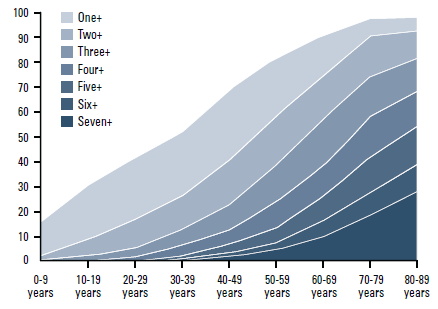
A 2008–2009 BEACH sub-study that measured the prevalence of multiple chronic condition at GP consultations found that of the 8707 patients sampled from 290 GPs, approximately half (47.4%, 95% CI: 45.2–49.6) had two or more chronic conditions. Figure 1 shows that the proportion of patients with multiple chronic conditions at encounters rises significantly with age; about 90% of patients aged 80 years or more had two or more chronic conditions, while nearly 30% had seven or more. (Ref 1)

Figure 1. Proportion of patients with different numbers of multiple chronic conditions at GP encounters by patient age

This suggests that we should reconsider our current health care system’s focus on single diseases.

“The Single Condition Model” in medicine

Most research is designed to show the effect of interventions in single conditions. Those with multiple conditions are excluded to avoid confounding the data. Guidelines are designed in general to guide management in single conditions. But if we follow these guidelines in multimorbid clients and sum all the interventions together, we end up with a significant “treatment burden”.

As an example – consider the following situation:

Mrs F• 79 years old with multiple conditions including:

• osteoporosis

• osteoarthritis

• diabetes type II

• COPD

• hypertension

If evidence based “Best Practice” treatment were followed, she would require:

• 12 different drugs in 19 dosages at five points in a day

• 14 different non-pharmacological interventions (rest,exercise, shoes, avoid exposure to allergens)

• nutrition: reduce intake of salt, potassium, cholesterol, Magnesium, Calcium, calories, alcohol

at least 5 doctor visits per year.

These multiple interventions are complex, difficult for both client and providers to deliver, are expensive and carry the risk of interactions which may cause harm.

Due to the “single condition” model of most research, we have little or no evidence that the interventions will be beneficial in this specific situation.

Multimorbidity and Clinical Reasoning

The study of Clinical Reasoning attempts to analyse the thought processes of a clinician when dealing with clinical problems. The “single issue” presentation is well studied – the potential traps and cognitive biases are well understood. One Clinical Reasoning framework was described by Murtagh (Ref 2 ). But the research quoted above would suggest that a single issue “diagnostic” presentation is increasingly uncommon. Many presentations involve managing multiple known problems and balancing priorities. This appears to be a “higher order” task – it has been generally left to sophisticated clinicians. The General Practitioner is uniquely qualified for this role. A broad medical knowledge and a long term relationship with the client combined with the relevant legal authority makes him/her an “Expert Generalist”.

But there appears to be little relevant research – the GP is making these decisions intuitively. Should we develop a formal model of Clinical Reasoning in this space?

The Rise of Machine Driven Care

In recent years there has been a view among many that treating long term conditions such as Hypertension, Diabetes and raised Cholesterol “to target” results in reduced Cardiovascular risk.

If a programme of interventions such as measuring blood pressure, testing blood sugar and measuring weight is delivered on a regular basis outcomes are improved. But there is “Therapeutic Inertia” which must be overcome – the measurements must be “treated to target” regardless of side effects or other reasons for not doing so. Doctors in particular have been regarded as being responsible for “Therapeutic Inertia”.

This idea is attractive because it can be delivered by less sophisticated clinicians. Careplans are devised with schedules of interventions – if they are followed there will be less emergency attendances. There is reasonably good evidence for this approach. (Ref 3)

But what about the Multimorbid clients? Can we devise Careplans to suit them? If we sum together all the interventions suggested by “Best Practice”, we create a complex matrix which in practice often is not delivered. Whats more, every client seems to have a different combination of Chronic Problems – it is impossible to devise “off the shelf” careplans to fit all. The electronic record systems that create these Careplans are not sophisticated enough to allow easy editing or to devise individualized Careplans.

Again it falls to the “Expert Generalist” GP to rationalize these complex plans and to reduce the medication and intervention burden that seems to build up like barnacles encrusting an old boat.

In my view we need to recognize the limitations of our “single issue” approach, develop electronic systems to manage multiple problems in a rational way and study the impacts of complexity and “noise” on safety and outcomes.

We should also develop models of Clinical Reasoning for this mode of practice.

References

  1. Australian Family Physician Volume 42, No.12, December 2013 Pages 845-845
  2. A Safe Diagnostic Model Ch 9 John Murtagh’s General Practice
  3. The cost-effectiveness of primary care for Indigenous Australians with diabetes living in remote Northern Territory communities Susan L Thomas, Yuejen Zhao, Steven L Guthridge and John Wakerman Med J Aust 2014; 200 (11): 658-662. || doi: 10.5694/mja13.11316