Commercialization and Continuity: Primary Care in Australia

The term “Primary Care” is thought to date back to about 1920, when the Dawson Report was released in the United Kingdom. That report, an official “white paper,” mentioned “primary health care centres,” intended to become the hub of regionalized services in that country. (ref)

One definition is

“the provision of integrated, accessible health care services by clinicians who are accountable for addressing a large majority of personal health care needs, developing a sustained partnership with patients, and practising in the context of family and community.”

Outcomes

There is good evidence that high quality Primary Care improves outcomes. Tertiary Care is expensive and in contrast, does not improve outcomes – it may even be harmful (1)

Six mechanisms, alone and in combination, may account for the beneficial impact of primary care on population health. They are (1) greater access to needed services, (2) better quality of care, (3) a greater focus on prevention, (4) early management of health problems, (5) the cumulative effect of the main primary care delivery characteristics, and (6) the role of primary care in reducing unnecessary and potentially harmful specialist care.

Preventive interventions are best when they are not related to any one disease or organ system. Eg cessation of smoking, wearing of seatbelts and physical exercise. The benefits of these interventions are clear. It is more difficult to show benefit from screening for specific diseases, though many interventions have been proposed. The idea that a checkup and early detection of various diseases will change the outcome is promoted regularly in popular media. But there is no convincing evidence that a regular checkup improves outcomes (see my previous article).

Equity is important – cost to the consumer reduces equity.

Primary care has a greater impact in improving outcomes in lower socioeconomic groups.

Specialist and tertiary services have either no effect or an adverse effect on overall outcomes. But access to hospitals and tertiary care is political “hot button” issue – politicians find it difficult to resist such pressure.

There is good evidence that patients attending a specialist directly are more likely to have unnecessary hospital admissions and poor outcomes than those seeing a Primary care physician first. (3)

There is a good theoretical basis for this – a specialist used to hospital practice over-estimates the rate of abnormality in a Primary Care population when planning intervention or investigation – ie the “pretest probability” in hospital patients is different to the probability in a Primary Care population. This affects the “sensitivity” and “specificity” of the intervention.  

WHO paper on Primary Care (2008) (2)

This paper describes several models of service delivery in Primary care.

“Medical” model.

In this approach, the client interacts intermittently with the service in treating or managing specific diseases or issues – the service has responsibility limited to the condition being managed for the client during an episode of care.  

“Program” Model

Programs target a specific area of the client or population Health – eg Chronic Disease, Trachoma,  Rheumatic Heart Disease. The client’s Health Care is broken into “parts” and different clinicians deal with one area. Care may become fragmented and it is important to communicate between various providers/clinicians. Often the record systems in use are not up to the task or there may even be “silos” between record systems. Responsibility for the client is limited to the condition being managed by the program.    

Holistic Model

The Clinician or service takes responsibility for the client from birth to death and manages all their issues including advocating in “nonmedical” issues such as housing and employment. This is regarded by the WHO as the most effective approach.

In practice most Primary Care services in Australia are a combination of the first and second models – it is rare to see the third model.

Generalist vs Specialist Care

If we accept that an “Holistic” model is best and most effective, and that Care should be fragmented as little as possible, then the Clinician delivering the care must have a broad knowledge and scope of practice. He/she must be able to deal with all ages and be able to cope with presentations across many clinical domains. Specialists deal well with their area of specialty but poorly otherwise. Current systems devalue the Generalist with many tasks they have previously performed being taken up by various specialities. (eg normal childbirth). Common conditions formerly dealt with by a GP are now routinely referred. This is inefficient and expensive and may result in poorer outcomes (see above).       

Continuity – the value of a relationship

Continuity is one of the principal pillars of good Primary Care. The Clinician has a relationship with the client and knows their history and family background. There is good evidence that this improves outcomes and saves money.

“Among other improvements, continuity of care leads to a higher quality of care, more preventive care, decreased emergency department visits, and reduced odds of avoidable hospitalization.”(ref)

Hospital systems deal with episodic illness on the whole – they “live in the now” and cope poorly with the requirements of ongoing care in complex chronic illness.

Complexity and multimorbidity

Primary Care is increasingly managing clients with many different issues. The Single Issue “cure” approach is no longer valid in these cases. We must become skilled at managing Complexity and adopt a different approach – incremental and iterative and accept that we cannot “solve” most of the issues. (See my article on Complexity).  Continuity is critical here.

What is happening now?

Commercialization

In Third World countries where Governments have not controlled the delivery of Primary Care and resources are limited, delivery has become dominated by commercial providers. Clients bear much if not all the cost. There is a proliferation of ineffective treatments and a reduction in quality. Equity is reduced and the “Inverse Effect” dominates – ie most of the care goes to those who can afford it but need it least.

In Western countries such as Australia this effect has been less, but Governments struggle with the cost of programs such as Medicare. Commercial providers have exploited the open access nature of Medicare, with the result that Government has imposed more and more complex rules and barriers to save costs. Subsidies such as Rebates have not kept up with costs and “the Gap” paid by clients has steadily increased. Specialist services are essentially no longer Bulk Billed and the rate of Bulk Billing in GP services is declining. Equity and access has declined as a result, where the Australian health system was once regarded as having excellent equity as a reasonable cost. New and expensive drugs and treatments appear regularly – Governments struggle to fund these. Medical Evidence has probably become corrupted (see my previous article).       

General Practice in Australia

General Practice was the principal provider of Primary Care services in Australia in the past. But some believe it is in decline, or even in crisis. Various bodies and clinicians are competing in the Primary care space eg nurse practitioners and pharmacists. Various specialists now perform many roles formerly the domain of General Practice – there has been a loss of scope for GPs

In the Health system generally continuity has been devalued. There is acceptance of massive staff turnover in services such as Remote Health. Hospital systems have always been staffed at a junior level by doctors in training who rotate regularly though different posts. Record systems in hospitals are primitive and not up to the task of compensating for this rapid turnover of staff.

Bulk Billing (medical services free to the consumer) and Emergency Department waiting times are political “hot button” issues receiving a lot of attention at present.

The Federal Government recently announced “Acute Care Clinics” – this promotes the idea that most medical presentations are single issue and that continuity is not important. Bulk Billing incentives were increased but the basic Rebate for GP consultations was left unchanged. The Health Minister (!!) urged consumers to “shop around” for a Bulk Billing clinic so they could avoid paying a gap fee. While cost is important to equity, this statement ignores the value of continuity. It appears the Health Minister does not understand this. Governments have been unwilling to increase Rebates to keep Gap costs down, instead relying on Bulk Billing incentives. Complex illness takes more time and requires sophisticated clinical skills to manage. These clients are generally less able to pay for services but the Rebates for longer consultations are effectively less.       

The GP is increasingly required to perform bureaucratic tasks, generally involving access to various expensive resources. There is also an increase in “legal” tasks such as licensing medicals and certificates. These consultations have three parties involved – the GP, the client and another body paying the cost or requiring the report or certificate. The GP has two relationships and duties – one to the client and one to the third party. These relationships may be in conflict and cause “moral ambiguity”– a conflict which the GP must manage.     

Conclusion

Good Primary Care is effective in improving outcomes and economical of resources.

The principal elements of Primary Care are “Expert Generalism” and Continuity. Complexity is an increasing challenge which requires a new approach and calls on a Generalist Knowledge and a relationship with the client.

 But the traditional model of Primary Care in Australia is under threat. GPs face more complexity for less money, competition from other providers, an increase in nonmedical tasks and a downgrading of clinical scope. Policy makers and politicians appear unaware of these challenges.

References

(1) Milbank Q. 2005 Sep; 83(3): 457–502.

Contribution of Primary Care to Health Systems and Health

Barbara Starfield, Leiyu Shi, and James Macinko

(2) The World Health Report 2008 Primary Health Care WHO

(3) Can Fam Physician. 2021 Sep; 67(9): 679–688.

Why does continuity of care with family doctors matter?

Review and qualitative synthesis of patient and physician perspectives

Dominik Alex Nowak, MD MHSc CCFP, Natasha Yasmin Sheikhan, MPH MHS

Sumana Christina Naidu, BHSc Kerry Kuluski, MSW PhD

Ross E.G. Upshur, MD MSc MCFP FRCPC

Rheumatic Heart Disease – a New Epidemic?

The incidence of Rheumatic Heart Disease (RHD) in Remote Australia has apparently increased in recent years. In part this is due to increased screening and possibly improved case finding. But Overdiagnosis due to reduced clinical standards may also explain the increase. The overdiagnosis of ARF can lead to unnecessary burdens on clients and the Health Service and increases the risk of overlooking other serious conditions. This highlights the need for improved diagnostic precision at first presentation.

The incidence of Rheumatic Heart Disease in Remote Australia appears to have increased significantly or even doubled according to some surveys in the last 10 years or so. (1)

What is happening? Are living conditions in Remote Communities getting worse still? Are we finding previously undiagnosed RHD?

We know that Acute Rheumatic Fever(ARF) and Rheumatic Heart Disease(RHD) are diseases of poverty and overcrowding. They are largely unknown in modern urban Australia but still are common in Remote Communities, particularly in NT. 

While living conditions in many communities are still “third world” standard, I can find no evidence for further worsening in recent years and my own anecdotal experience over 20 years or so would suggest that things are no worse than they have been in the past. “Closing the Gap” reports show little improvement, but they do not suggest worsening of living conditions and life expectancy.

Are we detecting previously undiagnosed disease?

In my anecdotal experience virtually every person in a community presents to the clinic, often frequently. It seems intuitively unlikely that significant symptomatic heart failure as a result of valve dysfunction would not have been picked up on presentation. Echocardiogram and cardiology review is available for acute symptomatic disease. Heart failure due to acute carditis or deterioration of RHD is uncommon, but can be confused with more common conditions such as pneumonia. Adverse outcomes as a result are likely to occur (https://tjilpidoc.com/2022/03/09/poor-administration-a-health-hazard/

There has been an understandable promotion of screening by Echocardiogram with programs such as the “Deadly Heart Trek” which have found asymptomatic RHD in some clients.  It is generally accepted that prophylactic Penicillin reduces recurrence of ARF and deterioration (though there are no prospective trials to prove this). Thus finding asymptomatic clients and treating them with prophylactic Penicillin would seem intuitively a Good Idea. But like all screening processes it can be difficult to show benefit – whether this screening will result in improved outcomes is yet to be established.

Overdiagnosis

There is one other possible explanation for the apparent increased incidence – that we are over-diagnosing ARF. In recent years there has been promotion of the idea that clinicians have been missing cases of ARF and should be on the lookout for it to reduce the incidence of serious RHD with prophylaxis. Once a diagnosis of ARF is established, even provisionally, that client is subject to a regime of monthly injections and reviews for anything up to 10 years. Many clients are discharged from hospital at their initial presentation without an expert assessment and classification – this is relegated to a later date. But elective Echocardiography and Cardiology review are difficult to access for Remote clients for various reasons. It may be months or even years before these are performed. By this time the relevant clinical signs and data may be lost or otherwise unavailable. As a result even senior clinicians are reluctant to reverse a provisional diagnosis and it can be difficult if not impossible to remove the Rheumatic Fever “label” once it is applied. 

ASOT AntiDNAse and streptococcal serology – what is the normal?

Acute Rheumatic Fever increases Antistreptolysin Titre (ASOT). The upper laboratory limit of normal in Australia is 200 IU. But the majority (65%) of asymptomatic subjects had a level >200 IU with some being as high as 800 IU. The level increased with age>10 and season (winter) in an Egyptian study (2). In Australia it is likely to be high in Remote Community subjects because of living conditions and frequent exposure to Group A Streptococcus, but I could find no research on this question for  Remote Australia. However, it seems likely that normal levels are much higher than the accepted laboratory range. This makes it a poor positive discriminator for ARF, though it may be helpful in ruling out the disease if it is negative. Similar issues apply in the case of AntiDNAse.(4)

The Clinical Criteria for ARF  

Skin infection is common and is the likely source of streptococcal infection in most cases of ARF, at least in the Top End and tropical Australia. (McDonald et al). In spite of this, conventional teaching still sees pharyngitis and tonsillitis as the primary source. Acute Rheumatic Fever remains a clinical diagnosis – there is no independent lab test or other indicator which can reliably discriminate it from other diagnoses. The diagnosis is made on the Jones Criteria, which were first introduced in 1944. They have been modified several times since to increase their sensitivity in low risk populations. This has the effect however of reducing specificity. In reading the references there still seems to be ambiguity, particularly with regard to arthritis/arthralgia. In the most strict version of the criteria, only polyarthritis was allowed as a major criterion – ie several joints involved with objective signs such as effusion and redness. In the more recent versions monoarthritis or even polyarthralgia are allowed as major criteria in high risk areas. Chorea is probably pathognomonic in young people as other causes of acute Chorea are uncommon. “Carditis” can be difficult to define in a Remote setting where echocardiography is not generally available on the spot. A small group of patients present in heart failure due to carditis – these are challenging to diagnose and manage and errors are frequent in this group.       

ARF – typical presentations

A common presentation is joint pain or arthritis with or without fever and raised ESR/CRP.  Chorea is less common, with acute carditis or other presentations the least common. In my 20 years experience in Remote Health I have not seen the classically described erythema marginatum or subcutaneous nodules. Because of the increased awareness of ARF as a diagnosis, the classical criteria have been relaxed – I have seen a provisional diagnosis of ARF made on a presentation of  monoarthritis or even polyarthralgia and raised CRP but without other criteria. ASOT appears to be used as a de facto criterion when it is not a positive discriminator (see above) Enthusiasts argue that any potential harm from overdiagnosis is outweighed by the benefit to a client with true ARF in reducing long term disability with prophylaxis. I would argue that the imposition on clients of an unnecessary diagnosis is not trivial, with monthly painful injections and frequent reviews for up to 10 years or more. There is a workload burden on the Remote Clinic involved and an opportunity cost as a result. The results of misdiagnosis at presentation can be significant – I have personally seen a case of knee pain in a child diagnosed as ARF when in fact it was tibial osteomyelitis and definitive treatment was delayed. On another occasion knee pain was considered to be ARF when in fact the diagnosis was Slipped Capital Femoral Epiphysis. In both these cases the misdiagnosis could have resulted in significant disability. Indeed a study at Royal Darwin Hospital showed that many of the cases admitted with presumed ARF had an alternative diagnosis at discharge. (3)   

RHD presentations

 The majority of clients with severe RHD requiring surgical intervention or documented valve changes on ECHO either have longstanding RHD with the details of the presentation lost in the mists of time, have presented with heart failure or have been found on Echocardiography screening. No clients who presented with joint symptoms in my case reviews showed evidence of RHD on Echocardiogram. Chorea seems a more reliable criterion with at least some of these subsequently developing RHD changes  

Clinical standards

As a practitioner near retirement of course I think things were better in the old days

Our medical clinical training was rigorous with an emphasis on clinical method. This emphasis appears to have been lost in recent years – many clinicians do not take a detailed relevant history of the presentation or refer to previous attendances or past history. Examination is cursory if at all.

We have come to rely on lab testing and imaging for diagnosis when a rigorous clinical method in the hands of an expert clinician remains the most effective diagnostic tool. Many clinicians are nonmedical – they have not undergone the clinical training that doctors go through. There is a heavy reliance on telemedicine, which means that examination is limited. General Practitioners have been largely relegated to administrative tasks and navigating complex chronic disease. Their role in the assessment of acute presentations has been reduced and their opinion is often not respected. They are no longer seen as “expert generalists” at the centre of the clinical process. The assessment of an acute presentation is the classic scenario where masquerades and alternative diagnoses must be considered as well as the “probability diagnosis”. (Murtagh 6) ARF has now become a “probability diagnosis” due to its promotion as a condition which must not be missed. Unsophisticated clinicians often do not consider the alternatives. ARF is a clinical diagnosis. I have noted a tendency in unsophisticated Remote Staff to overreport clinical diagnoses (Otitis media, pharyngitis, bronchiolitis for example). Is this happening with ARF also? 

Workforce issues in Remote Australia

The Remote workforce is heavily “casualized” and there is massive staff turnover in most Remote Clinics. Health encounters have become “commoditized” and anonymous – client and clinician often do not know each other. (see previous post)  Many Remote Services are struggling to maintain their workforce numbers. These factors further reduce the quality and safety of clinical assessments.

ECHO – how reliable is it?

In file reviews I have noted on some occasions that an echocardiogram was reported as abnormal with Rheumatic changes but subsequent echocardiograms were reported as normal. In one case there was a normal report with abnormal reports before and after. We have always been taught that Rheumatic valve changes do not resolve with time. If this is the case then the quality of echocardiograms must be brought into question. Ultrasonography is a difficult skill, with cardiac ultrasound even more so. Where there is doubt, there is a tendency to overreport changes to avoid missing significant lesions.  

Conclusions

The apparent increase in Rheumatic fever and RHD in the last decade can be explained in part by screening and finding asymptomatic patients. But it is likely that the increase in ARF diagnosis is in part due to overdiagnosis, as a result of casualization of the workforce, reduction in clinical standards, promotion of the diagnosis and reduction in the role of expert clinicians such as doctors.

This overdiagnosis has significant consequences for patients and Remote Clinics and it can be difficult to reverse the “label” once it is applied.  Any patient admitted with a provisional diagnosis of ARF should undergo careful assessment by a senior clinician before discharge and classification as ARF. While it is important not to miss cases of ARF, we should be aiming to improve our diagnostic precision so that we do not impose an unnecessary burden of treatment on clients and the health service, and do not miss other potentially serious conditions.   

An answer should be sought to the question – Do RHD changes resolve with time? Echocardiogram is a difficult skill – there is a need for review of some results and rigorous standards.

References

(1) AIHW Acute Rheumatic Fever and Rheumatic Heart Disease in Australia 2022

https://www.aihw.gov.au/reports/indigenous-australians/arf-rhd-2022/contents/arf

(2) Antistreptolysin O titer in health and disease: levels and significance

Alyaa Amal Kotby, Nevin Mamdouh Habeeb, and Sahar Ezz El Elarab

Pediatr Rep. 2012 Jan 2; 4(1): e8.

(3) The challenge of acute rheumatic fever diagnosis in a high-incidence population: a prospective study and proposed guidelines for diagnosis in Australia’s Northern Territory

Anna Ralph 1, Susan Jacups, Kay McGough, Malcolm McDonald, Bart J Currie

Heart Lung Circ . 2006 Apr;15(2):113-8.

(4) Detection of upper limit of normal values of anti-DNase B antibody in children’s age groups who were admitted to hospital with noninfectious reasons

Servet Delice,1 Riza Adaleti,2 Simin Cevan,3 Pinar Alagoz,4 Aynur Bedel,5 Cagatay Nuhoglu,5 and Sebahat Aksaray2

North Clin Istanb. 2015; 2(2): 136–141.

(5) Low rates of streptococcal pharyngitis and high rates of pyoderma in Australian aboriginal communities where acute rheumatic fever is hyperendemic

Malcolm I McDonald 1, Rebecca J Towers, Ross M Andrews, Norma Benger, Bart J Currie, Jonathan R Carapetis

Clin Infect Dis . 2006 Sep 15;43(6):683-9.

(6) General Practice 8th edition

John Murtagh

Complexity in Medicine

What is “Complexity”?

We all have a lay understanding of complexity – the word describes a system or object that has many parts, the workings of which may be difficult to understand. But many systems that appear complex are merely “complicated” – their many components are well described and understood, at least by someone. A Smartphone is such a system. A system that is “complex” is one that is comprised of many interacting components or systems which behave and affect each other in unpredictable ways. In our world there are many such systems such the weather, the economy, and large software projects as discussed in previous posts. We use mathematics to describe, analyse and design many of the objects and systems in use in our world today. But “Complex” systems are nonlinear and unpredictable – they are not easily amenable to mathematical analysis. (See my article on Complexity and Software design)

Another approach to Complexity is to consider that systems , clinical issues, or even patients can be regarded as an interconnected web with components that affect each other.

““Everything hangs together” defines complexity; the Latin word complexus literally means interwoven—studying complex problems thus is the study of interconnectedness and interdependence.

This notion is reflected in the definition of a complex (adaptive) system: A complex (adaptive) system is “a whole consisting of two or more parts (a) each of which can affect the performance or properties of the whole, (b) none of which can have an independent effect on the whole, and (c) no subgroup of which can have an independent effect on the whole.””(ref)

Most current protocols and research are based on a convergent, “reductionist” approach to diagnosis and treatment. Indeed much of of our Clinical Reasoning uses such a process. While this approach may help to “solve” a particular clinical presentation or issue, it often does not describe or capture the essential elements of the whole patient. As Primary Care Practitioners, we all are familiar with the patient with multiple issues whose condition does not improve in spite of our best efforts over time. A complex system is at the root of most “wicked” problems – could Complex System thinking improve our management of these clients?

In recent years there has been increasing interest in studying complexity in Health and developing some techniques for approaching these problems.

The Principles of dealing with “Complex” problems

“Start with Awareness”

If we recognize that a problem is Complex as defined above, we can then adopt a different approach. The first revelation is to accept that we may not be able to “solve” the problem but there may be elements that we can change.

Elucidate relevant issues and their connections

To understand the problem we must map out and model relevant issues and how they affect each other. There may be feedback “loops” – changing one issue will affect another which in turn will affect the first issue.

In most “wicked” problems there are multiple layers of issues which can be arranged in a hierarchy. Some are in our immediate sphere of influence, some are “high level” issues over which we can have no effect. Many of these issues are “wicked” problems in themselves. Of course, this map will always be approximate and imperfect, but it is a useful exercise to improve our understanding and document the problem.

Identify issues or connections that may be amenable to intervention

Evolutionary rather than revolutionary change

In the study of large “complex” IT systems, Bar Yam (ref) advocated incremental change in different areas of the system over time rather than a “Big Bang” revolutionary change. This principle can be applied to all Complex problems, even down to managing individual patients in Primary Care

Ongoing review, testing and adjustment of our interventions

Of course this requires continuity. This may be achieved by an individual relationship or by a well structured means of communication between members of a team.

Applying these principles to “Wicked” problems

The Primary HealthCare System as a Whole

At the recent WONCA conference in Sydney one of the Keynote speakers (Prof Trish Greenhalgh) described Primary Health as a “Sector Suffering”.

Could we apply Complex System thinking to this “wicked” problem?

To start to understand the issues, she outlined three broad areas where the Primary Health sector is suffering using the Buddhist “Three Poisons” as an analogy – Greed, Hatred/anger and ignorance/delusion.

Greed as epitomized by the pig describes the “Commercialization of Health” which now dominates and corrupts policy, research and indeed the evidence on which our practice is based. In my view, this is an “Elephant in the Room” which we should acknowledge and start to address.

Anger/hatred is epitomized by the snake. Many in the sector are burnt out and disillusioned, politics is combative and paralysed by vested interests. Anger can be negative and destructive, but it can also be harnessed to create positive change.

The Rooster epitomizes ignorance and delusion. Those managing the sector such as bureaucrats and politicians are either ignorant or choose to ignore the advice from those working in the sector. In the workplace of organizations we should build a positive team culture with active communication between all members

Clearly this analysis is only the start of deconstructing the issues, but it gives a framework to work from. There are many layers of issues and interconnections, some of which may be amenable to evolutionary change.

Complex system thinking on a population level – eg “Obesity”

The developed world is getting fatter and this issue underlies many Chronic Diseases. Obesity appears to be a “wicked” intractable problem at both population and individual levels.

At another session of the WONCA conference, the participants were invited to describe the population problem of obesity using the principles of complex system analysis. It soon became clear that there are many layers to the problem with many interconnected issues. Currently our approach is to exhort the patient to “eat less” and “exercise more”. But from even a cursory analysis it becomes clear that it is simplistic to rely on the individual to remedy the issue – this alone is a useful conclusion.

The individual patient encounter

Is this approach applicable at an individual patient/consult level? Are patient encounters “Complex”?

In Medical School we were trained to recognize and manage the patterns of single issue illness. Most of our education since has been also on individual conditions and medications with little emphasis on managing the whole patient. Yet much of Primary Care Medicine now is involved with managing Multimorbidity (see my previous article). In addition to the multiple medical issues and client factors such as language, there are social and family pressures, and resource and financial limitations imposed by payors. In my view these encounters are indeed “complex”.

Managing individual multimorbid clients using the principles of complex thinking outlined above would mean:

Identifying the issues and the connections between them, particularly those that are amenable to intervention and that positively affect others. eg Weight loss improving Diabetes and Hypertension. General Practitioners have been doing this intuitively for a long time using the Problem Oriented Medical Record is a mechanism. A good record can overcome many of the problems associated with lack of continuity. But Electronic Medical Records suffer from poor interface design, administrative “noise” cluttering the record and imperfect utilization. (see Software Design in Health )

Recognizing that there is no single discrete solution to the patient’s problems.

Aiming for evolutionary change

Testing our interventions over time. Here we must recognize the value of continuity and a professional relationship.

If we accept that the management of an individual multimorbid patient is a “Complex” problem, then prediction of their progress and the interventions required becomes difficult or impossible, particularly in the long term. Our current systems of Chronic Disease management rely on “Careplans” of scheduled interventions, often years ahead, by relatively unskilled and often “anonymous” practitioners. This approach is especially prevalent in Australia in settings where there is high staff turnover and/or a disadvantaged population, such as Remote Health, Corrections, or Refugee Health. These clients have a high burden of Chronic Disease and Multimorbidity.

If we were to adopt a “Complex Systems Thinking” approach, it is likely in my view that their care could be improved.

References

Approaching Complexity – start with awareness

Joachim P. Sturmberg MBBS, DORACOG, FRACGP, MFM, PhD

https://onlinelibrary.wiley.com/doi/10.1111/jep.13355

Josephine Borghi, Sharif Ismail, James Hollway, Rakhyun E. Kim, Joachim Sturmberg, Garrett Brown, Reinhard Mechler, Heinrich Volmink, Neil Spicer, Zaid Chalabi, Rachel Cassidy, Jeff Johnson, Anna Foss, Augustina Koduah, Christa Searle, Nadejda Komendantova, Agnes Semwanga, Suerie Moon, Viewing the global health system as a complex adaptive system – implications for research and practice, F1000Research, 10.12688/f1000research.126201.1, 11, (1147), (2022).

Get Your Checkup!

But at what Cost?

The “Checkup” has become a common theme In General Practice and Primary Care. 

Men are exhorted with blokey slogans like “get your grease and oil change” to have their regular checkup or they will suffer all sorts of dire consequences

Women are prompted with signs in public conveniences to have their regular PAP smear.

It seems an intuitively attractive idea that if we look for disease and detect it early we are more likely to be able to cure it and outcomes will be improved. 

In particular the spectre of Cancer is kept at bay.

But what is the evidence?

Screening for disease

Many examinations and tests have been proposed over the years to look for occult disease – ie disease that has not yet presented with symptoms or signs.

The RACGP Red Book lists many recommended procedures and a further 15 that it says are not supported by evidence.

 Health Screening is the process of looking for disease in people that are well in order to detect a disease or classify them as likely or unlikely to have a disease.

The aim is to detect early disease in apparently healthy individuals. Case finding is a more targeted approach to an individual or group at risk of a particular condition

Screening for disease in asymptomatic people is also termed “Primary Prevention”.

To be valid, a screening test or procedure must pass three evidence tests.

The test must reliably detect an important health condition before it would otherwise present. 

There must be a treatment for the condition. 

The outcome must be improved as a result.

Very few screening procedures pass these tests when they are rigorously applied.

Those that do have surprisingly weak evidence to validate them.

PSA (Prostate Specific Antigen) as a screening test 

The debate about PSA has raged for years and seems further than ever from being finally resolved.

We regularly see in social media and TV items exhorting men to have a checkup and all will be well 

But when we apply the 3 tests above to PSA as a screening test it falls short.

(1) Does it detect prostate cancer reliably? 

The figures are debated but roughly 20% of men with prostate cancer have a normal PSA, ie its sensitivity is 80%.

Conversely 80% of men with a high PSA do not have cancer (low specificity). However a high result invariably results in more investigation including biopsy which has its own risks and errors.

(2) Is treatment of prostate cancer effective?

Various treatments have been proposed – radical surgery to remove the cancer completely, curative radiotherapy or hormonal treatment   

All have significant failure rates (not curing the cancer) and side effects are almost universal. Impotence is likely, incontinence is possible and significant side effects such as radiation proctitis (inflammation of the rectum) are common.

Moreover many men with prostate cancer die from other causes – the cancer may never affect their lifespan. The 10 yr survival disadvantage of men with prostate cancer is only 2%

(3) Is the outcome improved?

A large German meta analysis concluded:

The benefits of PSA-based prostate cancer screening do not outweigh its harms. We failed to identify eligible screening studies of newer biomarkers, PSA derivatives or modern imaging modalities, which may alter the balance of benefit to harm. In the treatment group, 2 of 1000 men were prevented from dying of prostate cancer by treatment. But all-cause mortality was similar in both screening and control groups. In the screening group there was a significant burden of morbidity associated with investigation and treatment side effects. For every 1000 men screened, 220 suffered significant side effects or harm.

Once the diagnosis is made, there may be some differences in subgroups and risk can be stratified. There can be a discussion with the individual about the best treatment in their particular circumstances. 

But the initial decision to screen by necessity is based on population data. A discussed above, PSA screening in this situation is not supported by the data. 

The Evidence for Secondary and Tertiary prevention

Secondary and tertiary Prevention describe activities which manage known risk factors for disease (secondary prevention or “case finding”) or even the disease itself to prevent recurrence of events or worsening of the disease (tertiary prevention). Examples of this are managing risk factors for Ischaemic Heart Disease (Hypertension , Cholesterol, smoking) in a client who has suffered a heart attack or Hypertension in patients with impaired renal function. In this situation the evidence for benefit is much stronger than in Primary Prevention.(ref)

But to achieve this benefit the health service must maintain a clear summary of the client issues and ensure that a program of regular relevant interventions is delivered. There is reasonably good evidence that a programmed series of interventions (a “Care Plan”) effectively reduces hospitalization and complications of known Chronic Disease.

Here a good EHR (electronic Health Record) system with logical business rules is important. But many of the current EHR systems in use suffer from poor “data visibility” ie important data about a client such as past history is difficult to find. This is due to poor program design and “noise” due to unnecessarily complex dialogs and administrative information cluttering the record.

(see my previous articles Poor Administration – a Health Hazard?   and Software Design in Health – TjilpiDoc )

The General Checkup

A “General Checkup” has not been shown to improve outcomes in the general population.

A large meta- analysis of nearly 200,000 subjects failed to show benefit in outcomes (mortality or morbidity) (ref)

There were more diagnoses and treatment, however.

In the Indigenous population the idea of a checkup seems intuitively attractive because of the high rate of ill health generally.

However there does not appear to be research supporting this assertion.

The Checkup as a Safety Net

The Checkup in its various forms seems to be implicitly regarded as a “safety net”. 

However, the studies of a General Checkup and the effects on outcomes (minimal) would suggest that this is not so.

Indeed it is my anecdotal experience that known issues are often ignored and new disease is rarely found on a routine checkup. Most new issues present as an acute illness or event.

The Commercial Value and cost of the Checkup

The Checkup is a relatively low risk activity legally and can be performed by less sophisticated clinicians to a large extent as it is a scheduled and programmed activity. It does not require highly developed clinical acumen and there are usually no difficult decisions. In spite of the lack of evidence, it is well remunerated by Medicare. It has become a commercially attractive option for Primary Care practices. But it generates significant system costs in addition to the checkup itself. There are oncosts for pathology and imaging generated – this is attractive to providers of these services. In spite of all this extra cost to the system the research quoted above would suggests that there is no improvement in outcomes.

Primary Care, Imaging and Pathology Providers have a vested interest in performing these services, even though the evidence for them is poor.

Why the disconnect between evidence and practice?

The PSA question continues to be debated even the though the evidence is clear. A regular “General Checkup” continues to be promoted in spite of the lack of evidence of benefit and significant cost. 

Is this similar to the Climate Change debate where vested interests prevent real action? I would argue commercial vested interests are causing this disconnect. In fact much of our practice in Health is driven by commercial interests and much of our evidence has become corrupted by commercial drivers. As we struggle to deliver Health services and General Practice is apparently in crisis it is time in my view to review our whole basis of Health Service delivery and explicitly address these issues. 

References 

Assessment of prostate-specific antigen screening: an evidence-based report by the German Institute for Quality and Efficiency in Health Care

Ulrike PaschenSibylle SturtzDaniel FleerUlrike LampertNicole SkoetzPhilipp Dahm

First published: 07 May 2021

https://doi.org/10.1111/bju.15444

Citations: 4

BMJ. 2012; 345: e7191.

General health checks in adults for reducing morbidity and mortality from disease: Cochrane systematic review and meta-analysis

Lasse T Krogsbøll, doctor,Karsten Juhl Jørgensen, doctor, Christian Grønhøj Larsen, doctor, and Peter C Gøtzsche, professor, director

Effect of evidence-based therapy for secondary prevention of cardiovascular disease: Systematic review and meta-analysis

PLoS One. 2019; 14(1): e0210988.

Published online 2019 Jan 18. doi: 10.1371/journal.pone.0210988

Effect of evidence-based therapy for secondary prevention of cardiovascular disease: Systematic review and meta-analysis

PLoS One. 2019; 14(1): e0210988.

Published online 2019 Jan 18. doi: 10.1371/journal.pone.0210988

Multimorbidity – the New Epidemic

Multimorbidity is a relatively new word in the clinical lexicon – what is it?

It is commonly defined as the presence of two or more chronic medical conditions in an individual. It can present challenges in care particularly with higher numbers of coexisting conditions and related polypharmacy.

These conditions may include recognized Chronic Disease problems such as Diabetes, Heart disease, Chronic Airways Disease and Osteoarthritis, but also

Mental Health problems

•ongoing conditions such as learning disability

•symptom complexes such as frailty or chronic pain

•sensory impairment such as sight or hearing loss

•alcohol and substance misuse.

How common is it?

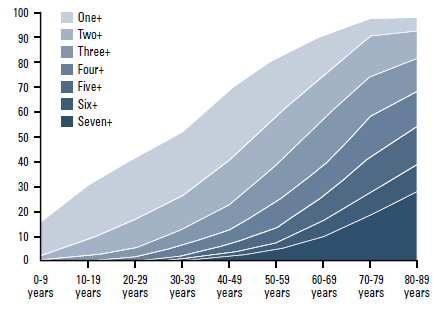
A 2008–2009 BEACH sub-study that measured the prevalence of multiple chronic condition at GP consultations found that of the 8707 patients sampled from 290 GPs, approximately half (47.4%, 95% CI: 45.2–49.6) had two or more chronic conditions. Figure 1 shows that the proportion of patients with multiple chronic conditions at encounters rises significantly with age; about 90% of patients aged 80 years or more had two or more chronic conditions, while nearly 30% had seven or more. (Ref 1)

Figure 1. Proportion of patients with different numbers of multiple chronic conditions at GP encounters by patient age

This suggests that we should reconsider our current health care system’s focus on single diseases.

“The Single Condition Model” in medicine

Most research is designed to show the effect of interventions in single conditions. Those with multiple conditions are excluded to avoid confounding the data. Guidelines are designed in general to guide management in single conditions. But if we follow these guidelines in multimorbid clients and sum all the interventions together, we end up with a significant “treatment burden”.

As an example – consider the following situation:

Mrs F• 79 years old with multiple conditions including:

• osteoporosis

• osteoarthritis

• diabetes type II

• COPD

• hypertension

If evidence based “Best Practice” treatment were followed, she would require:

• 12 different drugs in 19 dosages at five points in a day

• 14 different non-pharmacological interventions (rest,exercise, shoes, avoid exposure to allergens)

• nutrition: reduce intake of salt, potassium, cholesterol, Magnesium, Calcium, calories, alcohol

at least 5 doctor visits per year.

These multiple interventions are complex, difficult for both client and providers to deliver, are expensive and carry the risk of interactions which may cause harm.

Due to the “single condition” model of most research, we have little or no evidence that the interventions will be beneficial in this specific situation.

Multimorbidity and Clinical Reasoning

The study of Clinical Reasoning attempts to analyse the thought processes of a clinician when dealing with clinical problems. The “single issue” presentation is well studied – the potential traps and cognitive biases are well understood. One Clinical Reasoning framework was described by Murtagh (Ref 2 ). But the research quoted above would suggest that a single issue “diagnostic” presentation is increasingly uncommon. Many presentations involve managing multiple known problems and balancing priorities. This appears to be a “higher order” task – it has been generally left to sophisticated clinicians. The General Practitioner is uniquely qualified for this role. A broad medical knowledge and a long term relationship with the client combined with the relevant legal authority makes him/her an “Expert Generalist”.

But there appears to be little relevant research – the GP is making these decisions intuitively. Should we develop a formal model of Clinical Reasoning in this space?

The Rise of Machine Driven Care

In recent years there has been a view among many that treating long term conditions such as Hypertension, Diabetes and raised Cholesterol “to target” results in reduced Cardiovascular risk.

If a programme of interventions such as measuring blood pressure, testing blood sugar and measuring weight is delivered on a regular basis outcomes are improved. But there is “Therapeutic Inertia” which must be overcome – the measurements must be “treated to target” regardless of side effects or other reasons for not doing so. Doctors in particular have been regarded as being responsible for “Therapeutic Inertia”.

This idea is attractive because it can be delivered by less sophisticated clinicians. Careplans are devised with schedules of interventions – if they are followed there will be less emergency attendances. There is reasonably good evidence for this approach. (Ref 3)

But what about the Multimorbid clients? Can we devise Careplans to suit them? If we sum together all the interventions suggested by “Best Practice”, we create a complex matrix which in practice often is not delivered. Whats more, every client seems to have a different combination of Chronic Problems – it is impossible to devise “off the shelf” careplans to fit all. The electronic record systems that create these Careplans are not sophisticated enough to allow easy editing or to devise individualized Careplans.

Again it falls to the “Expert Generalist” GP to rationalize these complex plans and to reduce the medication and intervention burden that seems to build up like barnacles encrusting an old boat.

In my view we need to recognize the limitations of our “single issue” approach, develop electronic systems to manage multiple problems in a rational way and study the impacts of complexity and “noise” on safety and outcomes.

We should also develop models of Clinical Reasoning for this mode of practice.

References

  1. Australian Family Physician Volume 42, No.12, December 2013 Pages 845-845
  2. A Safe Diagnostic Model Ch 9 John Murtagh’s General Practice
  3. The cost-effectiveness of primary care for Indigenous Australians with diabetes living in remote Northern Territory communities Susan L Thomas, Yuejen Zhao, Steven L Guthridge and John Wakerman Med J Aust 2014; 200 (11): 658-662. || doi: 10.5694/mja13.11316

The Containment of Anxiety in Remote Health

“Government policy and poor performance by bureaucracy is a significant cause of “The Gap” in First Nations Health and life expectancy.”

This is clearly a contentious statement.

However many reports have identified deficiencies in policy and its delivery which have remained unchanged over many years.

In Remote Health, many clinics appear to be in a state of chaos – staff turnover is high, morale is low and community engagement is poor. Service delivery is not measured in any meaningful way but almost certainly it could be improved. Remote communities can be a difficult environment for visitors – the journey of one such visitor is described in a narrative by Mamood (1).

This paper describes a period in the history of a fictional remote health facility in a similar narrative format. While the narrative is fictional, it will resonate with many in the remote health workforce. Similar events occur on a regular basis. The paper puts forward an hypothesis based on social psychology theory to explain these events.   

A Year in the Life of a Remote Clinic

Every so often the planets align and a clinic functions well for a time

A hard working and effective manager is employed, often after a period of crisis in the clinic. While she has no formal training in management, she is a veteran of many years in remote practice, capable of dealing with any situation and able to turn her hand to whatever task is required. She has endured long lonely nights of call, facing difficult situations of distress, violence and medical emergency. She knows the issues which face the service and wants to improve things for the local people. She has watched their struggles for many years and now has a deep respect for them.  She seems to have a natural affinity for people and the skills required to make them work as a team.

She engages local staff and the clinic begins to connect with the community again. Staff now stay for longer than they used to. Local people appreciate someone who knows their name and their family connections.  Mothers bring their babies to a person they know and trust. Before they stayed away and were blamed for avoiding their obligations to conform with an impersonal system of measurements and injections, administered by an ever changing parade of unfamiliar faces.

 A workplace culture slowly develops where hard work and a cooperative clinic environment is valued – staff treat each other and their clients with respect and courtesy. The word gets around amongst the remote health workforce that this clinic is the place to work. The manager has among other qualities, the ability to choose the right staff to maintain the good working environment she has created.

One of the qualities she is looking for is the ability to think independently and be self motivated. She is able to delegate tasks knowing that staff will perform them without supervision. As a good manager she knows that she must delegate ruthlessly so that she can focus on higher order tasks.

Still the workload is overwhelming – CQI and KPIs, ordering systems that seem to require her to communicate with an endless series of functionaries to get necessary supplies, employment processes that take months to get contracts written, constant errors by pay office which need her intervention,  the vagaries and disputes of the travel subsidy system, the human foibles of staff – it seems endless.

She tries to engage an administrator to handle some of the paperwork. But departmental policy does not allow accommodation for these employees. In these communities housing for visiting workers is scarce and jealously guarded by the various agencies.  

Local indigenous staff lack the computer literacy and authority to deal with the whitefella’s bureaucracy. Family obligations may prevent them from dealing evenhandedly with travel and escort disputes, but they are able to provide a connection and knowledge of the local community. If the manager is fortunate she finds a partner of a worker housed by another agency to deal with the intricacies of the whitefellas system and with local staff has the best of both worlds.

She maintains the workload for a while – weekends and evenings are spent catching up. She manages the many small crises in a remote place at the cost of her own health and sanity.

She solves the many small problems that staff have delegated up to her and then gone home to relax, secure in the knowledge that they have done their duty.  

She knows the ways of the organization she works for – she is skilled at keeping her higher managers satisfied and away from where they can do harm.

She cannot report these minor crises to them and hope for support. From bitter experience, she knows that their response will be punitive and destructive or create ever more paperwork to manage.  She knows that some of the things she has done to create the functional workplace that is the clinic are not entirely in line with policy, even if they have been “unofficially” sanctioned by her managers. Sometimes she has ignored directives from above in order to get the work done –  there did not seem to be any penalty.

But the planets do not remain aligned for ever. There are many ways this fragile island can be destroyed.

Perhaps she gets tired, or sick, or just wants to go back to talking with the clients that are the “real” work of the organization. After all those staff who are junior to her are actually earning more money than she is. They get paid for being on call while she fills the gaps gratis as part of her award. They seem to be able to come and go as they please.  As a manager she has to do whatever is necessary with no extra pay for all those weekends and nights.

Perhaps her administrator’s partner moves on, transferred by the agency that he works for. Suddenly she finds the endless demands for travel escorts become her issue. It seems that every enquiry at the front desk, every phone call and every complaint which were previously filtered and managed by her office administrator have to be instantly referred to her – no-one else seems willing or able to intervene. 

While she tries to have a hand in choosing staff she is overruled in the name of economy – “we cant use that agency – they are too expensive”.

The person who arrives is not someone she would have chosen. Because the clinic is larger than average, town has decided that they can send staff inexperienced in remote health for training. They will need supervision for a period and will of course, not be able to participate in the after hours roster until they are able to make independent decisions about patient treatment. Other staff resent the newcomer for her easy life, her ability to go home and relax at night, her inability to perform basic tasks such as venepuncture or IV cannulation, her penchant for referring patients to others without solving the issues or even exploring the possibility of doing so. The tyrant that is the after hours roster dominates the clinic. The mantra from management in town is that programs such as proactive treatment of Chronic Disease are now “core business”. If only the clinic staff could be diligent enough to see clients in a planned manner then they would not need to be seen for emergencies. Still people seem to turn up until the small hours of the morning with mind numbing regularity – children with fever, old ladies struggling for breath, people with wounds from fights and family violence, psychotic patients, survivors of suicide attempts – the pressure for decisions is unrelenting. And this after a busy day of work – the person on call feels their mind turning to water – perhaps they sense that their decision making is unsafe, as if they had drunk a bottle of wine. They just wish the clients would go away and let them sleep. No pilot or other emergency services worker would be asked to do such shifts.  

Eventually this situation can longer be sustained. With the reduced number on call due to the junior staff member other staff decide to leave or take extended holidays. Perhaps someone makes a mistake – a child with fever had a serious infection – not just the flu. Perhaps a serious injury was missed. It falls to the manager to make up the deficits and explain the mistakes to family and administrators.  

Or perhaps the attention of town management turns to the clinic – “we have a problem at XXX”  Of course the fault is all at the clinic end – it seems that there are no KPIs to measure pay office errors or time to delivery of equipment orders or staff turnover rates, or the number of local indigenous staff employed.

There has been an unexpected death in the community that received unwelcome publicity, exposing the higher management to the glare of media attention.

A man has collapsed – bystanders called 000 and there was an interminable delay before the clinic ambulance arrived. Unlike many communities, it appears that they have political allies in town. The issue has reached the ear of the minister and he is seeking answers from his department. Media have been alerted – they are pressing the minister for details. The manager knows that nothing galvanizes her superiors like a “ministerial”. There have been written reports and a teleconference to discuss the issues. But it seems that the powers that be are not satisfied. A group of senior managers and their support staff arrive by chartered aircraft from town. Anyway, they can use the opportunity to see how the clinic is running and canvass other issues. They are ushered into the manager’s office and the door is closed.

Clinic business is suspended for the day – only “real emergencies” will be seen. One by one, those staff that were involved in the incident enter the room, surrounded by a ring of hostile faces. At the end of the inquisition they emerge looking chastened.

Like a dog that has been disciplined by its master, the senior manager must bite someone more junior in the hierarchy as quickly as possible. He does not see it as his duty to shield his staff from the heat of the media attention and look for constructive solutions to any issues that might exist.

The staff member who first responded to the emergency feels exhausted and humiliated by the experience. The inquisitors did not seem to understand that such emergencies are always fraught affairs, with the outcome determined by harsh statistics – only a tiny fraction of people who have an out of hospital cardiac arrest will survive. The staff member had only been in the community for a few weeks – there were delays in finding the place of the collapse, delays in calling his second on call, vital equipment had been left behind. Still he should have known all these things – did he have any orientation? The ring of eyes now turn to the manager. Among the thousand details that a remote clinician must remember before being able to function in the workplace was the orientation relating to emergencies – did she use the orientation manual? Why did he not know these things?

Soon it is time for the senior managers to fly back to town – they must be there before nightfall. The other issues facing the clinic have been forgotten – they will have to wait for another day. There is little support for the staff member involved – he is left to work through the events of the crisis in his mind, analyzing them over and over. There is no review of the processes and systems which led to the failures which might have made the difference – no thought of the effects of staff turnover, of the impossibility of orientation in the short time allowed. The manager consoles him as best she can – she has seen this scenario before. The staff member takes the next day off work and then decides to cut short his contract – after all he only had a week to go.

Management are conscious that staff turnover is an issue – it is expensive, and has effects on service delivery and morale. They have appointed a new nurse to a long term position to replace an experienced RAN who has just left the community. He had come to the end of his contract. He was well regarded – competent, likeable and with a good connection with those hard to reach young men. He had run the men’s clinic and managed the Mental Health patients, ensuring that they received their regular medication. Without this they were likely to present to the clinic in the middle of the night in a police van, distressed by their demon voices and surrounded by a crowd of anxious family.

He had expressed a wish to stay – why had he not simply been re-employed?

Perhaps it was because he had been sharply critical of management at times, even though he never deviated from official policy in dealing with clients. His partner had also worked in the community and been well regarded. She had published academic work with conclusions that ran counter to current department policy. Apparently he had wanted some variations from the award – more time off to see family. This could not be accommodated according to higher management – it might set a dangerous precedent. So he had simply been allowed to leave – he could not afford to have no work arranged. The manager’s entreaties had fallen on deaf ears – no-one in town had seen fit to negotiate a special arrangement with an effective staff member to maintain continuity. The manager now had to ensure that the Mental Health clients were managed and she had another gap in the after hours roster.

The new staff member has limited experience in Remote work but she has undergone some weeks of orientation in town. Still she would not be able to participate as first on call in the roster for at least a month. Within days of her arrival her furniture is delivered – it seems she intends to make the community her home. The manager was not involved in her recruitment but she comes with glowing references and is apparently very capable.

But soon it seems there are problems – there is interpersonal friction between various staff and the new recruit. The new staff member is well aware of her rights and quite prepared to speak up to enforce them. She is unwilling to deal with children as she has limited experience in this field. Within a few weeks she is taking time off due to various ailments.

The manager moves quickly to rectify the situation – clearly this person is not suitable for remote work. A small team such as hers must have all members working effectively. She confronts the new recruit and voices her concerns. The reaction is predictable – the new recruit feels unfairly treated and threatens to sue. A standoff ensues – the department is involved in mediation between the parties. It is rumoured that she has been involved in a legal fight with a previous employer. Those in town who made the appointment dont see the problem – the clinic is fully staffed after all.  The new recruit is sent away for several weeks of training to improve her skills.

The probationary period in her contract passes without action – it seems she will be here for the long term after all.

The manager has decided she can no longer sustain this life and will move on at the end of her contract. She will join the army of temporary health staff paid by agencies to fill the many gaps in the system. She will be able to work seeing clients only – no more arguments with travel, no more headaches over housing, no more dealing with complaints. She wont be in any place long enough to become embroiled in the local politics. Her pay will be managed by the agency – no more arguments with pay office over oncall entitlements. 

She was under no illusions that she would change the world when she arrived. Still it is with sadness that she attends the ceremony put on for her by the local people – they dance for her as an honoured member of their community. She reflects how little has changed in spite of her years of work.

She has given three months notice of her intention to quit. But her position is not advertised until some weeks after she has gone. It will take several months to work through the steps involved in employing a replacement. A series of temporary managers are engaged to run the clinic until a more permanent replacement can be found. The merrygoround of faces begins again. The competent staff that were coming back regularly decide that they have better options elsewhere. Local people are resigned to the ups and downs of government services – they have seen it all before.

Eventually a new permanent manager is employed.

She appears much more closely aligned with town than the last one – she regularly communicates with them via phone and email on all sorts of questions. She does not approve of many of the arrangements that the previous manager made to run the clinic. Local staff are not entitled to housing, vehicles are being used for nonclinic purposes, there are too many on call mobile phones. There is disquiet with some of the changes. Medications will no longer be delivered to clients, log books must be kept for vehicle use, detailed job descriptions will be drawn up, people will not be seen after hours unless their condition is serious. The planning meeting that was previously held each morning with a cup of coffee is longer required – the manager will delegate tasks.  The recall list generated by the computer record system which was checked through each morning is now largely aspirational and on some days is ignored altogether. 

Some local staff have not been seen for weeks – the new manager is not concerned – they are not central to the running of the clinic in any case. 

Strangely enough the clinic numbers seem to be down – in particular young men and mothers with children appear not to be attending as they were. But the after hours roster is as busy as ever. In spite of the edict about “big sickness” on a sign at the shop and on the door of the clinic,  many of these attendances seem to be for conditions that could have been dealt with during the day. When one nurse asks why she is told that they had come earlier but the wait was too long. She has heard all this before..

And so the clinic enters another phase of its history.

The Containment of Anxiety

In the narrative above, it is an individual manager who creates a functioning clinic against all the odds. It seems at times that the hierarchy above her conspires to destroy what she has created, rather than supporting and recognizing her endeavours.

Isabel Menzies-Lyth was a social psychologist who wrote several papers on the psychology of large organizations. Her various papers were collected in a volume  “The Containment of Anxiety in Institutions”. Perhaps the most well known is entitled “Social Systems as a Defence against Anxiety”.(2)

Her original research describes the situation affecting nurse trainees in a large London hospital in the 1960’s. She was engaged by hospital management to find a solution for poor staff morale and a high rate of attrition of trainees.

Nursing students were dropping out of training – often after several years. Many were promising students. Morale was poor in those remaining. Menzies-Lyth was engaged to find out why this was happening. She conducted an extensive series of interviews and concluded that:

The patient journey is distressing to observe – they suffer pain, disability and even death. Nursing tasks can be unpleasant or even repulsive. Relationships formed during a hospital stay are lost as patients are discharged. Strong primitive and often distressing emotions are aroused in staff. 

An organizational culture developed to cope with this – this involved collusion, often unconscious, between staff members in creating systems and strategies that gave some immediate relief from these distressing emotions. However these strategies were often dysfunctional and damaging to to the service and its delivery of care in the longer term. 

Some of these strategies were:

(1) Depersonalize relationships by constant rotation. Avoid relationships with individual patients – “Everyone looking after all the patients”. Patients were seen as conditions or numbers.

(2) Eliminate Decision making by ritual task performance. Decisions in a clinical context always involve some uncertainty and anxiety as a result. If this decision making can be replaced by a ritualized task, anxiety can be reduced.

(3) Splitting the patient into parts. There is a strong tendency to break the care of an individual into components to be performed by various staff.

(4)   Projections – juniors unreliable and untrustworthy – all tasks must be closely  managed  – detailed protocols must be followed without question. Superiors are invested with qualities like all knowing and reliable.

(5)   Decision making process is complex, cumbersome and diffuse with many checks and counterchecks. The end result is that it is difficult to identify who is responsible for a decision and individual responsibility is reduced.

(4)   Rotation carried into higher levels – no-one acts in a position for long – they are often seconded to other positions.

When this culture occurs in an organization, it is immutable and largely unconscious – anyone who attempts to challenge it is punished. The end result is that there is no discretion for juniors in any tasks. The Organization is unresponsive to client needs and other problems due to the poorly functioning decision making process. 

Those who want to exercise discretion are dissatisfied – these tend to be the more capable. They are not rewarded for their initiative – indeed they may be punished. Hence their only option is to leave. Thus the organization is gradually filled by those who remain and who will tolerate this environment.

 Does this model explain the seemingly intractable problems with poorly functioning management in health and perhaps in government bureaucracy in general?

The Health Workforce

Many of the staff in Health bureaucracy have a background in Nursing and many have experience in Remote work.

Remote Health clinics themselves are also run by nurses – doctors work in some of the larger communities, but have only a peripheral role and little authority over the day to day running of a clinic.

The local indigenous workforce has little control over clinic management in Government run clinics. In community controlled organizations a local health board has more control which may mitigate some of the issues discussed here.

The level of local indigenous workforce engagement varies from little or none to being an effective part of the health workforce, depending on local conditions. In times past, clinic services were delivered entirely by local health workers in some places. However due to the complexity of modern health, community expectations, legal issues and government policy, this is now rare.

The Effects of Rapid Staff Turnover

In remote health clinics, frequent staff rotation appears to be tolerated even though there is a stated policy to reduce it. At times it reaches extraordinary levels – some clinics may undergo virtually a complete staff turnover every few months.

This has various effects, mostly deleterious.

It is impossible to provide detailed orientation for a rapidly changing workforce in a complex and challenging environment.

Administrative systems such as pharmacy, stock control, the organization of specialist visits  and travel are run usually by nursing staff. As a result of the frequent turnover and difficulties in orientation, these function poorly – this has a significant impact on service delivery.

Clinical effectiveness and indeed safety depends on a good relationship with clients. This is virtually impossible with rapid staff turnover.

In particular, a good working relationship and knowledge of clients is critical to effective programs involving continuity such as the management of chronic disease, child health, and antenatal care. There is good evidence that effective management of these programs reduces emergency attendances, evacuations and hospital admissions.

The rapid turnover of staff is likely to be more expensive. Agency margins are added to the cost of travel and relocation.

Why is this situation tolerated in spite of its adverse effects, increased cost and an express policy to the contrary? Personnel management is essentially a centralized bureaucratic task which is almost never under the control of individual clinics. What is the driver of this in Government organizations?

Is the constant rotation a hangover from hospital nursing training?

Health staffing has always been characterized by constant rotation and change, at least at a junior level. Nurse training and junior medical officer positions in hospitals involve rotations between various placements. These are typically for 3 to 6 months only in each position. 

Poor management performance is tolerable for short term agency staff, as long as they get paid and can go away to recover. Agencies absorb the cashflow penalty of errors and disputes over pay and conditions. Nurses working for agencies cite the constant errors by pay office as one of the factors in their decision to leave fulltime employment. This poor performance by bureaucracy is costing the government dearly in increased casual rates. 

Because of constant change and turnover, the organization is afflicted by a sort of “corporate dementia” as the knowledge of staff is constantly lost. Reports into remote health practice seem to repeat the same issues. Policies seem to go in cycles.

This corporate dementia worsens the already poor performance of the organization in policy development and decision making. It probably also affects clinical safety. A new staff member with no knowledge of a client is reliant on the Electronic Health Record. But these records are filled with a mountain of irrelevant “noise” and have poorly formatted user interfaces. Important clinical issues may not be detected by a staff member struggling with the complexity of their new role. 

Just as clients are not consulted, front line staff are rarely involved in policy development. Rather than fixing the problem at source, solutions to issues often involve short term or labour intensive fixes with further impositions on already overworked frontline clinical staff. This in turn further impacts service quality.    

Local people do not have much influence.

In spite of the millions spent on “consultation” there are few if any systematic surveys of the local people’s views on the delivery of health services, much less any action based on them.

People in remote communities have had relatively little political representation, though this is possibly changing in recent elections. It is unusual for potential staff to be vetted by community members.

Staff selection for long term positions appears to be poor – is there an unconscious bias towards those who will not challenge the culture?.

Perhaps more importantly, staff retention appears not to be addressed in any meaningful way. In private enterprise, organizations will always prefer to retain current staff, rather than recruit replacements. They know this is less expensive and results in better company performance even though they may have to pay a premium to retain good staff. In Remote Health, long term employees report that there is no acknowledgement of their service. Capable people are not actively retained. Those who express dissent with current policy may be actively removed as they pose a threat to organizational culture.

Staff turnover appears to be the dominant issue affecting Quality and Safety in the delivery of Remote Health Services. But this does not apply in the part of the organization managing the process – these staff are relatively stable. Government Bureaucracy is not exposed to the rigour of private enterprise and does not measure performance by the generation of profit. The managing workforce is relatively protected by Public Service employment awards.

Conclusion

If Menzies-Lyth’ thesis is true, what are staff in the organization anxious about? Perhaps this organizational culture develops in any large protected organization which is not subject to regular scrutiny. In any case it appears that service delivery quality is not something that drives management decisions. Health systems are in crisis, particularly in Rural and Remote practice. If this is to be addressed, the culture and quality of management must improve. 

References

(1) “Kartiya are like Toyotas”

Click to access kartiya_are_like%20_toyotas.pdf

(2) A Case Study in the Functioning of Social Systems as a Defence against Anxiety

Isabel E P Menzies

http://mastor.cl/blog/wp-content/uploads/2017/02/Menzies.-1960.-A-case-study-of-nursing-service-of-a-general-hospital.pdfA Case Study in the functioning of social systems against anxiety